
Wetlands for Resilience
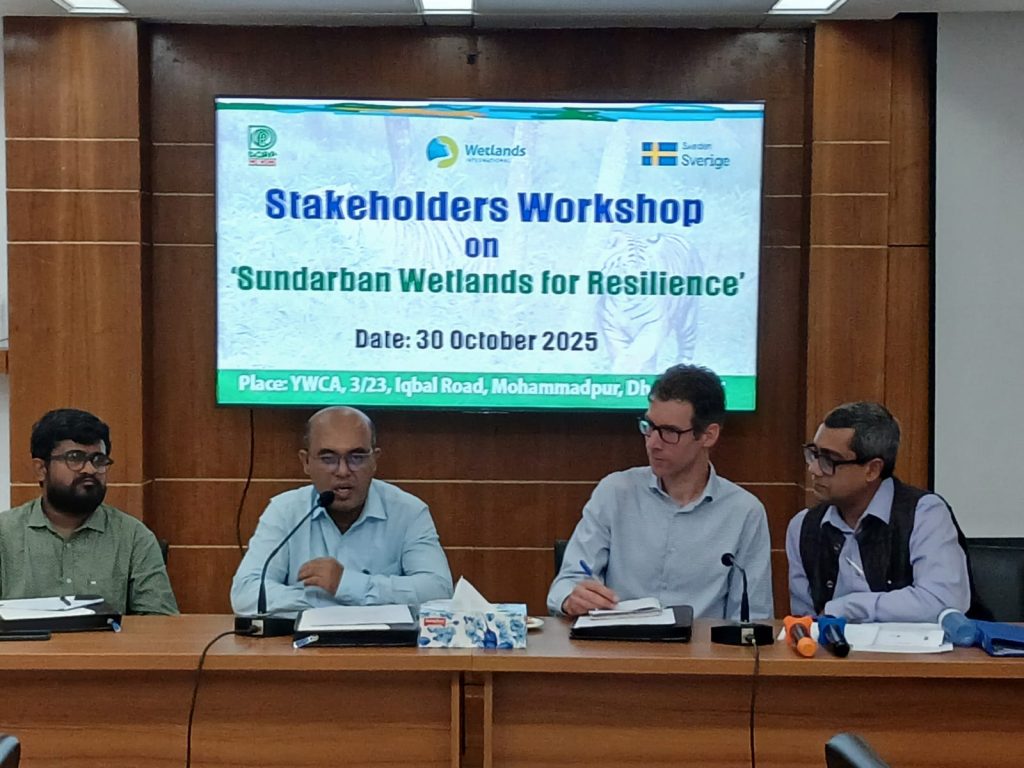
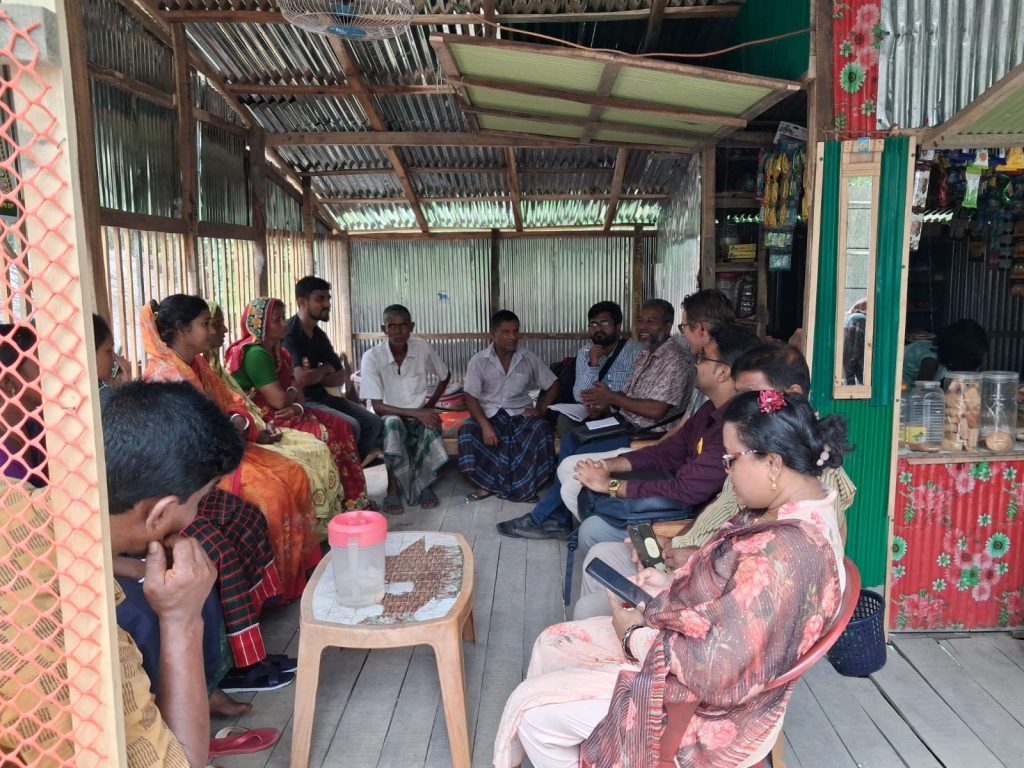
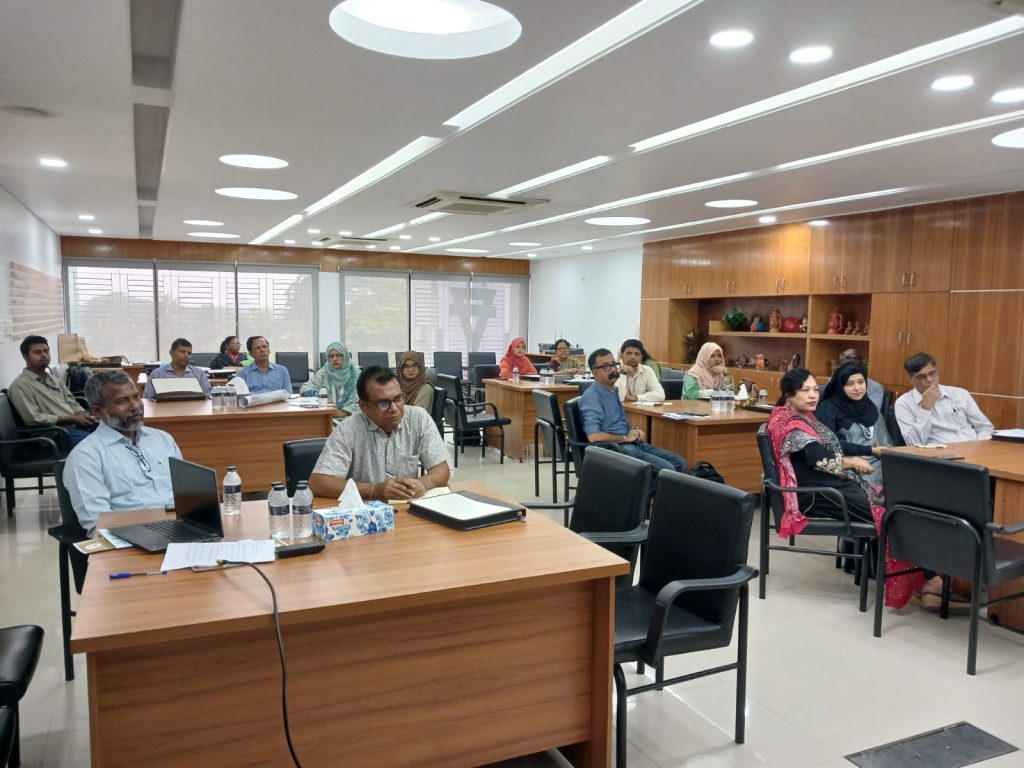
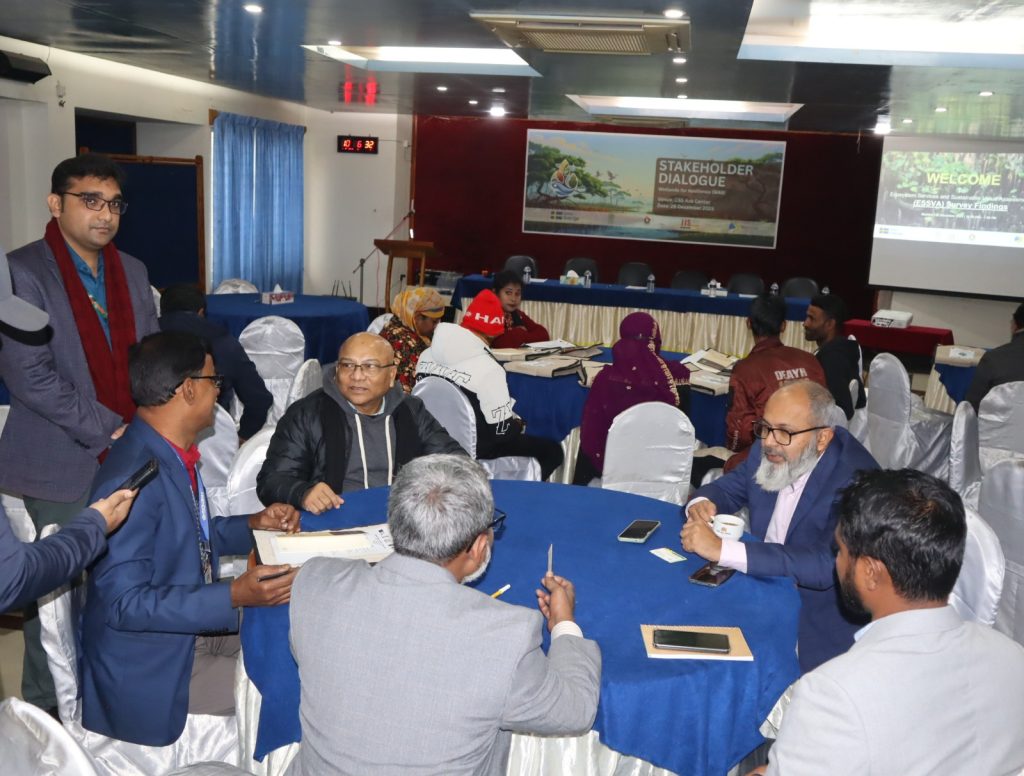
Wetlands for Resilience (W4R) — Sundarban Landscape, Bangladesh
1. Wetlands for Resilience (W4R) — Sundarban Landscape, Bangladesh
The W4R programme, supported by Sida, adopts a district-based, community-driven restoration model across the Bangladesh Sundarbans landscape
2. Project Objective
To restore selected community ponds and feeder canals in the Sundarbans ECA to improve freshwater availability, enhance fish-based food production, and strengthen climate resilience for vulnerable households.
3. Proposed Intervention
The project will rehabilitate 3–4 priority community ponds and restore connectivity of 1–2 feeder canals identified through ESSVA hotspot analysis and community validation.
4. Description
Pond rehabilitation will involve desilting to increase storage capacity, strengthening embankments to reduce saline intrusion, and improving rainwater capture. Climate-resilient fish stocking will be supported in coordination with local fisheries authorities. These actions will directly enhance freshwater retention and fish production, improving household nutrition and income. Canal restoration will include selective desiltation, removal of blockages, and improvement of water flow between canals and adjacent ponds. Improved connectivity will enhance tidal flushing, reduce stagnation, and strengthen fish nursery habitats. By restoring circulation, the intervention will also reduce localized flooding and waterlogging. The intervention is expected to benefit approximately 300–500 households through improved dry-season water access, increased fish yields, and strengthened resilience against salinity intrusion and extreme weather events.
The selection of interventions is grounded in the Ecosystem Services Shared Value Assessment (ESSVA), which identified key challenges including freshwater scarcity, salinity intrusion, declining fisheries productivity, and ecosystem degradation. Based on ESSVA findings and participatory prioritisation processes with communities and stakeholders, pond and canal restoration have been prioritised, complemented by mangrove–freshwater interface restoration. All activities—from planning to implementation and monitoring—will follow a community-based approach, ensuring communities are central to decision-making, implementation, and long-term management.
Wetlands International South Asia (WISA) will serve as the technical partner, providing technical guidance, validation, capacity support, and quality assurance. Interventions in 2026 will be implemented at a pilot/demonstration scale, prioritising quality, ecological suitability, and community ownership over expansion of area.
Pilot Implementation – Bagerhat
1. Pond Restoration
· Restore 3 community ponds through desilting, embankment strengthening, and improved water retention, with enhanced focus on increasing storage capacity, durability of structures, and long-term usability.
- Ensure active community participation (labour, planning, oversight)
2. Canal Restoration
- Restore 1 feeder canal to improve hydrological connectivity, with strengthened efforts on improving water flow, reducing blockages, and ensuring sustained connectivity between canals and ponds.
- Establish community-led maintenance systems
3. Fisheries Enhancement
- Introduce climate-resilient fish stocking and strengthen community-managed fisheries systems, including improved post-restoration utilisation of water bodies.
- Promote community-managed fisheries governance systems
4. Mangrove Restoration
· Implement 1 demonstration site focusing on mangrove restoration through hydrological improvement, assisted natural regeneration, and supplementary planting, with strengthened community participation and site protection measures.
- Support assisted natural regeneration and limited plantation
- Strengthen ecological linkages between freshwater and mangrove systems
D. Community Institutions and Governance
- Establish and strengthen Water Management Committees (WMCs)
- Ensure inclusion of women, youth, and vulnerable groups
- Build capacity for long-term management and governance
- Support organisation of and participation in multi-stakeholder platforms (MSPs) to share findings, align stakeholders, and strengthen landscape-level coordination.
Interventions aim to generate ecological, social, and economic returns by improving ecosystem health, strengthening community resilience, and supporting sustainable livelihoods.
E. Monitoring, Learning and Communication
- Facilitate community-based monitoring systems
- Track ecological, hydrological, and socio-economic outcomes
- Contribute to:
- Learning and documentation outputs
- Communication materials
- Pilot review processes
The number and location of interventions are indicative and may be refined during implementation based on field assessments, community consultations, and technical guidance from WISA. Where feasible, implementation will leverage convergence with government schemes and local resources to enhance sustainability and scale.
